
Taking Responsibility
30 September 2026

Children are born confident and capable learners. We see this from the very beginning, whether it's an infant reaching for a toy that's just out of reach, persevering to roll over, or a toddler proudly declaring, "I can do it myself!" These moments are all part of a child's natural drive to learn, grow, and become more independent.
If you’ve ever had a toddler attempting to put on their own shoes when you’re running late or wanting to pour their own milk on their breakfast, you’ll know how tempting it can be to step in and help. Life is busy, and often it's quicker, easier, and less messy to do things ourselves - but every time children are given the opportunity to make a choice, take responsibility, solve a problem, or persevere through a challenge, they're developing important life skills that will support them as they transition to school or kura and throughout their lives.
The best part? Supporting independence doesn't require special resources or elaborate activities! Every single day presents many opportunities that can make a big difference. Here are some simple ways you can encourage your child's growing independence and help them thrive.
Offer choices
One of the simplest ways to support your child's growing independence is to offer choices throughout the day.
There is a common misconception that giving children choices means letting them make all the rules, but that isn't the case.
Children feel safer when there are clear boundaries and expectations, and it's within those boundaries that opportunities for choice can be created.
A helpful approach is to decide what is non-negotiable, then offer 2-3 options that still lead to this outcome. For example, if bedtime is 7pm, we wouldn't ask our child what time they would like to go to bed. Instead, we could offer choices that still lead to bedtime at 7pm such as "It's almost bedtime. Would you like to read a story on the couch or in your bed?"
These small opportunities for decision-making help children feel heard, valued, and respected. Over time, making choices helps them develop confidence in their own abilities and a stronger sense of agency. They begin to learn that their ideas, preferences, and actions matter, while also understanding that choices exist within the boundaries set by caring adults.
Self help skills
Many of the tasks adults complete without even thinking can often be complex skills that children need time, space and practice to master.
While it can often be quicker and less messy to do things for our children, giving them opportunities to practise these self-help skills is a powerful way to support their growing independence.
This might mean allowing extra time for your child to put on their own shoes, carry their plate to the bench, or attempt to do up their jacket before stepping in to help.
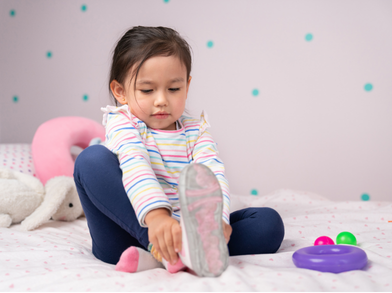
These skills become especially important as children transition to school or kura. While many parents worry about whether their child can recognise letters, numbers, or write their name, teachers often place just as much importance on a child's ability to manage their own belongings, follow routines, ask for help when they need it, and take care of their basic needs independently
Encourage problem solving
As your child develops, you may notice that their frustration levels often peak right at the point where they desperately want to do something themselves but haven't quite mastered the skills to do it yet.
It is important to remember that supporting independence isn't about expecting children to do everything or solve every problem on their own. It's about providing the right balance of guidance.
When children are given opportunities to solve problems, they learn that challenges (and mistakes) are a normal part of learning. Over time, they begin to trust their own abilities, develop resilience, and gain confidence in tackling new situations independently.
Uninterrupted play opportunities
If your child attends an early childhood centre in New Zealand, you'll probably already be familiar with the idea that children learn through play. In fact, New Zealand's early childhood curriculum, Te Whāriki, recognises play as a meaningful and important vehicle for learning.
Uninterrupted play is a fantastic way for children to develop their independence and agency. Through play, children can experiment with different ideas, solve problems, make decisions, and test their own theories. They are in control of the direction their play takes, which gives them opportunities to build confidence in their own abilities.
Providing open-ended resources, including objects that aren't toys at all, can further courage children's imagination and creativity. Cardboard boxes, cushions, fabric, loose parts, and natural materials can often inspire richer play than toys with a single purpose (check out our previous blog on loose parts play by clicking here).
Risky Play
As well as providing opportunities for uninterrupted play, allowing children to engage in risky play is another way they learn to take responsibility and develop their independence.
This can seem a little scary at first for parents and caregivers. After all, our natural instinct is often to step in and keep children safe. However, risky play doesn't mean dangerous play. Instead, it involves opportunities for children to test their abilities, challenge themselves, and learn where their limits are.
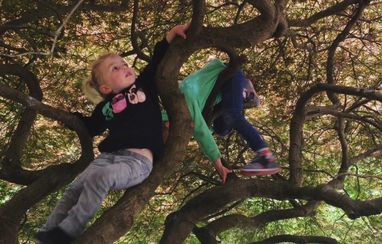
Think about a child climbing a tree, balancing along a log, or navigating uneven ground. There is some risk involved, but there is also a huge amount of learning taking place. Children are assessing the situation, making decisions, and adapting their actions based on what their body is telling them.
Risk analysis and risk management are important life skills, particularly as children grow older and begin seeking greater independence. You can read one of our previous blogs on risky play by clicking here.
Age-appropriate responsibilties
Children love to feel that they are trusted and that they play an important role within their family.
Responsibilities don't need to be big. For a younger child, this might be helping to feed a pet, putting dirty clothes in the washing basket or watering plants. As children grow, they can gradually take on more responsibility and ownership over daily tasks.
These experiences help children learn responsibility, develop practical life skills, and build confidence in their ability to contribute to the world around them. They also help children develop a sense of belonging and contribution, showing them that they are an important and valued member of their family.
It's important to remember that the goal isn't for tasks to be completed perfectly. The real learning happens in the doing. By focusing on the process rather than on perfection, we encourage children to keep trying, take ownership, and develop a positive attitude towards responsibility.
The Evolve Promise
Here at Evolve Education, our curriculum is built on the knowledge that all children are confident and capable learners. Every day, our kaiako intentionally create opportunities for children to make decisions, contribute to their learning, solve problems, take on responsibilities, and learn through play.
So the next time your child insists on doing something "all by myself", take a moment to pause and see it as more than just a request for independence. It's a sign that they're growing, learning, and building that all important confidence in their own abilities.

Learning to Problem-Solve through Junk Play
What if everyday household items could become powerful learning tools for your child? Junk play transforms simple materials such as cardboard boxes, lids, tubes and fabric scraps into opportunities for creativity, critical thinking and imaginative play. In early childhood education, junk play helps children develop problem-solving, communication, collaboration and fine motor skills while encouraging curiosity and independent learning. Discover why this open-ended play experience is so valuable for children's development and how you can support learning through play at home and in your local Evolve Education early learning centre.
Read more

Pathways to School and Kura
Starting school or kura is a significant milestone for both children and parents. While many families focus on early academic skills, research and educators agree that confidence, curiosity, resilience, communication, and independence are the foundations of a successful transition. Discover how everyday play and simple home activities can help your child develop the lifelong learning skills they need to thrive at school and beyond.
Read more

Raising Creative and Innovative Problem Solvers
Young children are natural problem solvers, using creativity, curiosity and trial-and-error to explore the world around them. At Evolve Education, we intentionally nurture these skills through play-based learning, encouraging tamariki to think independently, embrace challenges and develop confidence, resilience and critical thinking. By supporting children to explore, experiment and discover their own solutions, we lay the foundation for lifelong learning in an ever-changing world.
Read more
