
Raising Creative and Innovative Problem Solvers
29 June 2026

If there is one thing that some young children seem to do remarkably well, it's finding innovative and creative ways to solve problems!
It may be that they are trying different strategies to reach items that have gone under the couch, or maybe even that they want the light switch on and have to find a work around when it’s just slightly too high for them. Both of these situations require some creative and innovative thinking in order to come up with a solution.
While these moments may seem small to us, when children are encouraged to come up with their own solutions to problems, they are actually laying the foundations for skills that will support them through life.
This is especially important as they journey into a future with careers, industries and technology that may not even exist yet!
What is Creative and Innovative Problem-Solving?
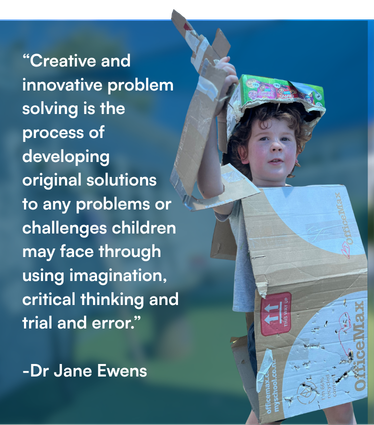
For young children, problem solving rarely looks like sitting down and thinking through a problem logically. Instead, it often happens through play, exploration, experimentation and trial and error.
For example, you may notice your child:
- Using household items in unexpected and creative ways during play.
- Testing out different methods to complete a task.
- Finding alternative solutions when something doesn't work.
- Asking endless "why" and "what if" questions.
- Creating imaginative scenarios and stories.
These are all signs that your child is developing these all important problem-solving skills.
Why is Problem Solving Important?
As adults, we solve problems every day without even thinking about it. We make decisions, overcome obstacles, adapt to change and find solutions when things don't go according to plan. The foundations for these abilities begin right from early childhood!
When children are offered plenty of opportunities to solve their own problems, they develop:
- Confidence. Each time a child overcomes a challenge, they are learning that they are confident and competent learners. The more opportunities a child has to overcome age appropriate challenges themselves, the more their confidence in their own abilities will grow!
- Resilience. Not every solution works the first time. Learning to persist through challenges helps children develop resilience and understand that mistakes are often the most valuable part of learning.
- Critical Thinking Skills. Problem solving encourages children to observe, question, predict and evaluate. These skills support learning across all areas of development.
- Creativity. Children naturally think outside the box. Providing opportunities for creative problem solving allows them to generate new ideas, explore possibilities and develop flexible thinking.
- Independence. As children become more confident problem solvers, they begin relying less on adults to provide answers and more on their own ability to find solutions.
Ways that you can encourage creative and innovative problem solving at home:
- Pause Before Stepping In. When your child encounters a challenge, try giving them a moment to think before offering a solution. A way you could do this include asking questions such as “what could you try next?”, Or “what do you think might happen if...” This can encourage children to think critically and explore possible solutions independantly.
- Embrace Mistakes. Mistakes are a natural part of learning. When something doesn't go as planned, try responding with curiosity rather than focusing on the outcome. This helps children view challenges as opportunities for growth rather than failures. Sharing with your child when you make mistakes can also give them the confidence and assurance that mistakes are okay and all a part of the process!
- Provide Open-Ended Materials. Simple, low cost or even free resources can often provide the richest opportunities for problem-solving. Items such as blocks, loose parts, cardboard boxes, natural materials such as stones, sticks and leaves, and construction materials encourage children to create, experiment and innovate.
- Encourage Curiosity and Wonder. Children are naturally curious learners. When your child asks questions, explore the answers together. Sometimes saying "Let's find out" can be more powerful than providing an immediate answer. Curiosity is often the starting point for creative thinking and problem solving. Another great way to spark curiosity and wonder in children is to simply start by saying “I wonder....”
- Celebrate the Process. Rather than focusing solely on the finished product, acknowledge the effort, persistence and thinking that went into it. Comments such as "You worked really hard to figure that out” or “I noticed you kept trying different ideas”, can help children value the learning process itself. It’s important to remember that its often not what they learn that matters the most, it’s how they learn it that really sets them up as lifelong learners.
The Evolve Promise
At Evolve Education, we recognise that today's tamariki are growing up in a rapidly changing world. Supporting children to become creative, adaptable and resilient problem-solvers is an important part of preparing them for the future.
Through play based learning experiences, thoughtfully designed environments and responsive relationships with our kaiako, we intentionally create opportunities for children to create, innovate and solve problems every day. We encourage curiosity, imagination and persistence, helping children develop the knowledge, skills and dispositions that support lifelong learning.
As part of the Evolve Promise, we work collaboratively with whānau to support tamariki to be confident, happy, curious and independent learners. Together, we can nurture children's natural creativity and help them develop the confidence to tackle challenges, explore new ideas and discover solutions of their own!
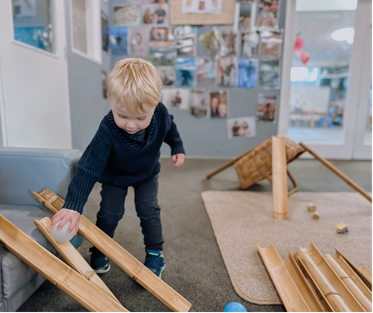

Learning to Problem-Solve through Junk Play
What if everyday household items could become powerful learning tools for your child? Junk play transforms simple materials such as cardboard boxes, lids, tubes and fabric scraps into opportunities for creativity, critical thinking and imaginative play. In early childhood education, junk play helps children develop problem-solving, communication, collaboration and fine motor skills while encouraging curiosity and independent learning. Discover why this open-ended play experience is so valuable for children's development and how you can support learning through play at home and in your local Evolve Education early learning centre.
Read more

Pathways to School and Kura
Starting school or kura is a significant milestone for both children and parents. While many families focus on early academic skills, research and educators agree that confidence, curiosity, resilience, communication, and independence are the foundations of a successful transition. Discover how everyday play and simple home activities can help your child develop the lifelong learning skills they need to thrive at school and beyond.
Read more

Navigating Big Emotions
Big emotions are a normal part of childhood, but they can feel overwhelming for both children and the adults supporting them. In this article, we explore why children experience emotional outbursts, how brain development influences behaviour, and practical ways parents and caregivers can respond with calm, connection and confidence. From understanding "flipping the lid" to simple breathing games that help children regulate their emotions, you'll find supportive strategies to help your child navigate big feelings and build emotional resilience.
Read more