
Supporting your Child's Early Literacy
12 August 2024
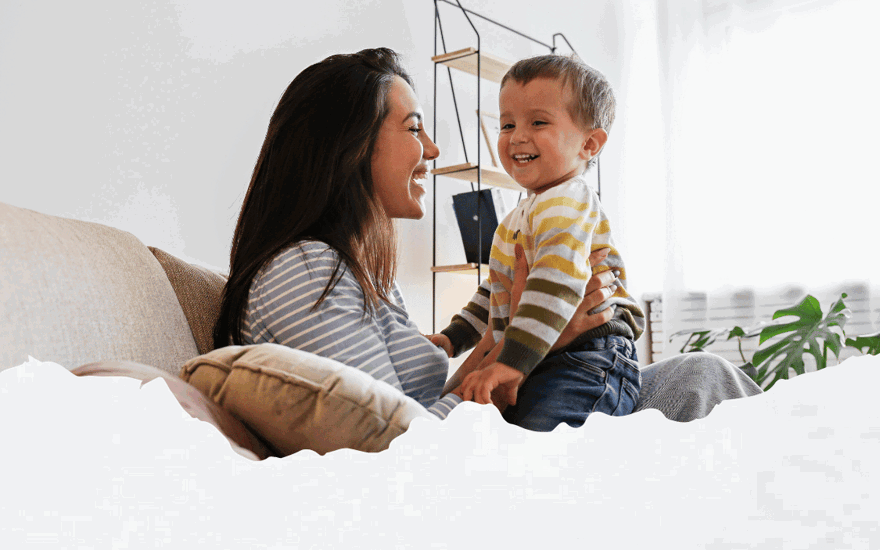
There are many ways that whānau can positively impact their child’s early literacy development by creating opportunities during day to day interactions. Here are just three of the ways you can help support your child on their literacy learning journey.
Listening and speech-sound awareness (phonological awareness)
Being down at your child’s level and speaking face to face helps your child to see the shape of your mouth while you are talking which will help make it easier for them to imitate you and create their own speech sounds.
Talking nice and slow will also help your child to pick up all the different sounds that go into creating words and sentences.
Pointing out noises you can hear in the background of everyday situations is a fantastic way to support phonological awareness.
Playing games such as eye-spy helps children to pick up what the initial sound in words are.
Reading to your child
Children learn so much from being read to long before they learn to read, in fact, studies have shown that even reading to a baby in utero can help stimulate brain activity that helps support early literacy and language development!
Just imagine that if you read a book a day to your child from the day they are born that is 1825 books they have the potential to be exposed to before they’ve even turned five!
Reading helps children learn the sounds of letters in spoken language as well as helping them learn lots of different things all about their world.
Not only do books provide children with new vocabulary but they can also introduce thoughts and ideas that may extend beyond what they may otherwise encounter on a day to day basis.
Reading rhyming books with lots of repetition is a great way to help your child recognise the different sounds in words and that they are made up of smaller speech sounds. Sliding your fingers under the words as you read them creates a link between how the word sounds and how it is written.
Reading to your child doesn’t have to be confined to just books however- pointing out different signs, items in the grocery store and other objects with the written alphabet on them helps children to become familiar with the look of letters and the phonological sound that they make.
Singing to your child
Singing is a fun way to immerse your child in early literacy!
It helps children develop listening skills as they listen to the rythyms and rhymes of what they are being sung.
Singing (and also clapping to the beat) is a great way for children to hear different syllables – often syllables are sung in different notes.
Singing also helps children with memory recall as it activates a different part of the brain than what spoken language uses! Ever wonder why you can remember all the words to a song from your childhood but can’t remember where you put your keys?!
Children love the repetition that songs and music can bring (just ask early learning teachers how often they are asked to play baby shark!)
It is never too late (or early) to start supporting your child with their early literacy learning, not only is it fantastic bonding time together but it can also help set your child up as a lifelong learner.

The Magic of Twigs, Stones and Leaves: using natural materials in your child's play
In a world where ‘educational’ toys and equipment are promoted heavily across different media settings it seems important to share some of the very real ways that you can help support your child’s learning and development through the use of natural materials which are easier both on the planet as well as on your wallet!
Read more

Te Whāriki for Whānau
As a parent, navigating the world of Early Childhood Education can often feel daunting, and at times, it may seem like you’re trying to grasp an entirely new language, one that may even differ from centre to centre based on their unique philosophies! However, there is one common thread among all early learning services in New Zealand: they all follow a bicultural early childhood curriculum called Te Whāriki.
Read more

Holiday Ideas
The end-of-year holidays can be a big change for young children and whānau. Discover simple, low-cost activity ideas that support routines, connection and wellbeing during this busy time.
Read more