
Supporting Diverse Learners through Meaningful Reinforcement in Early Childhood
03 April 2026

Written by Rebecca Gilmour
In every early childhood setting, learning unfolds through thousands of small interactions—moments where children try something new, take a risk, share an idea, or connect with others. What often guides them forward are the natural rewards embedded in these everyday experiences. A smile from a peer, a successful tower that finally balances, a warm acknowledgement from a Kaiako - these simple outcomes shape how young children understand the world and their place in it.
When we talk about “rewards” or “reinforcement,” we’re not introducing an artificial behaviour management technique. We’re recognising something that already exists in every learning environment: the brain’s natural tendency to repeat actions that lead to meaningful, positive outcomes. Children experience these outcomes constantly during play, exploration, and social exchange. Reinforcement is not separate from learning - it is part of how learning happens.
Because of this, teachers sometimes worry that using rewards may undermine children’s intrinsic motivation. But when reinforcement is used thoughtfully—when it highlights effort, encourages persistence, and strengthens a child’s sense of competence—it doesn’t replace intrinsic motivation; it supports it. Descriptive feedback such as, “You kept trying even when it was tricky,” offers children useful information about what they did and how they succeeded. This builds autonomy rather than dependence and aligns beautifully with the relational, child-led principles of Te Whāriki.
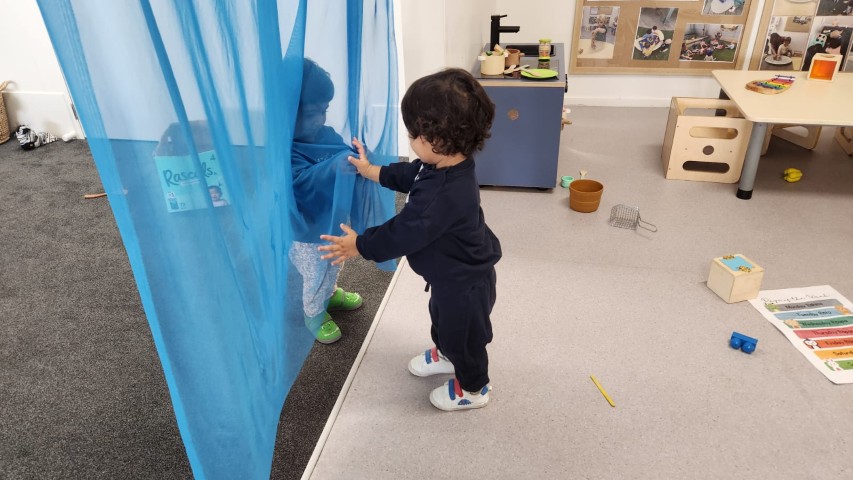
Understanding how different brains respond to reinforcement helps us create environments where all children can thrive. Many neurotypical children find social cues intrinsically rewarding. Laughter with friends, being included in play, or receiving a nod of encouragement from an adult often provide enough positive feedback for them to link their actions with long term relational benefits. For these learners, natural reinforcement is usually sufficient; social interactions themselves motivate cooperation, empathy, and participation.
For neurodivergent children, however, the picture can look different. Neurological differences mean their reward systems may not fire consistently from the same cues. Children with ADHD often need novelty, movement, or urgency to activate their dopamine systems. A child with autism might not interpret a smile or verbal praise as rewarding but may find deep motivation in sensory experiences, predictable routines, or interests like vehicles, patterns, animals, or numbers. When natural social rewards don’t land, it’s not because the child is unmotivated—it’s simply because their neurology requires a different kind of input.
This is why structured, intentional reinforcement can be so powerful for neurodivergent learners. When we offer rewards that are immediate, predictable, and genuinely meaningful to the child, we support them in ways that match how their brain processes information. Breaking tasks into micro steps, providing clear choices, celebrating small successes, and using sensory or interest-based reinforcement helps reduce frustration and builds confidence. These strategies aren’t about control—they’re about ensuring every child has equitable access to success.
Just as important is helping children understand the social world around them. Many neurodivergent learners do not automatically pick up on the emotional cues of others. Briefly narrating real moments, “Look at their big smiles; they’re enjoying sharing the swing with you”, helps make these cues visible and supports social referencing in a natural, nonintrusive way.


For teams, building a shared understanding of reinforcement begins with acknowledging that it is already part of daily practice. Children motivate one another, kaiako respond intuitively to children’s interests, and natural consequences play out constantly in play environments. By recognising these moments, teams can see reinforcement not as an addon, but as an integral part of responsive pedagogy.
Reflective discussions can help teachers connect reinforcement to their centre’s philosophy and to the values they hold. Using simple neuroscience supports kaiako to understand why different children need different approaches, and why reinforcement doesn’t undermine intrinsic motivation, it strengthens it.
When kaiako experience reinforcement positively within their own professional culture, when effort is acknowledged, ideas are valued, and growth is celebrated they become more confident in offering the same support to children.
Ultimately, supporting diverse learners through meaningful reinforcement is about honouring how each child learns best. It is about relationships, responsiveness, and the belief that every child deserves to experience success in ways that feel authentic to them. When we understand and use reinforcement thoughtfully, we give every child the feathers they need to take flight.
Mā te huruhuru ka rere te manu.
With feathers, the bird can fly.

The Gift of Generosity in Early Childhood Education
I want to talk about a value that I believe lies at the very heart of early childhood education—generosity. Now, when most people hear the word “generosity,” we often picture giving gifts, donating money, or sharing resources, maybe even chocolate. And yes, chocolate is a very generous gift—especially if you share it in the staffroom!
Read more

Courageous Conversations in Early Childhood
In our early childhood settings, relationships are everything. They shape the way we work with tamariki, with whānau, and with each other. They influence the culture of our rooms, the wellbeing of our teams, and the learning environment we create every day.
Read more